Sunday, September 30, 2012

"In Space"... Camp


If there ever was a movie that could force me to overlook the outstanding flaws of Stanley Kubrick’s 2001: A Space Odyssey, that movie is Space Camp.  When I first viewed 2001 about a year ago, I was overwhelmed by the incredible boredom it induced and unimpressed by its seemingly outdated effects.  Upon watching Space Camp, I acquired a new appreciation both for the narrative pace of 2001 and the nature of its special effects.

Space Campy, err Camp, is a sci-fi tale that was made in the 80s but resembles a product of the pre-Star Wars 70s.  It documents the adventures of some inept and immature teenagers who all undergo a positive change of character, become adults, and learn the value of teamwork when they are unexpectedly sent into space by a protocol/astromech droid named Jinx.  The basic 5-act plot of the movie is as follows: kids act like kids at space camp, lovable robot sends kids into space, kids run out of oxygen, kids work together to refill oxygen tanks at space station, kids magically turn into responsible adults and pull off emergency landing.  Should you watch the whole thing, you’ll also experience a forced romantic subplot that never resurfaces after the “lake scene”, a disturbingly bestial relationship between a young boy and his robot, some partial nudity in the women’s dormitory, cheesy old-feminism (“I’m gonna be the first female shuttle commander.”), a prolonged sequence in which not one but two people leave the space shuttle to retrieve oxygen supplies, a total of two “mild peril” scenes in which someone drifts away from the shuttle only to be rescued predictably by another astronaut, another scene of peril where someone gets stuck outside the cargo bay doors (she’s rescued later), a crying scene, and a surplus of drama at Mission Control, all accompanied by overwrought, generically heroic tunes by John Williams of all people.

Clichés and stereotypes abound.  We have the nerdy brainiac girl, the arrogant hothead who conquers his pride and learns responsibility by the end, and the young boy who’s obsessed with dreams of visiting the great beyond and fighting a glorious war against the evil Empire (Star Wars is referenced extensively throughout the movie, probably to alleviate the need for the writers to craft their own story).  At the beginning of the movie, a central teenager named Kathryn is put into a simulation machine which is supposed to teach pilots the science of landing a shuttle.  She fails of course, complaining afterwards that she needs another chance.  As I foretold out loud, she gets one in the film’s final ten minutes, when she has to land the real spacecraft.  In an “inspiring” triumph over her former challenges, she somehow manages to land the ship safely, prompting the resounding cheers of those at NASA, who apparently can’t comprehend their legal predicament or the many millions wasted on the shuttle’s fruitless voyage.  The “messages” of the movie are simplistic and typical of a kiddie flick: believe in yourself, follow your heart, and work together.

All this might be forgiven if the movie at least moved at a brisk pace, but Space Camp makes even 2001 seem gripping.   My father has hypothesized that the pacing of A Space Odyssey is supposed to match the film’s theme: long periods of boredom punctuated by brief moments of intense excitement. 2001 does indeed have flashes of intensity that captivate the audience, e.g. the lethal rebellion of HAL 9000 against his masters and Dave that represents the climax of the film, and thus the movie has some entertainment value.  Space Camp, however, is all boredom, no excitement, despite its strained efforts to inject peril into the narrative.  Never once does one feel concern or anxiety for the lives of the intrepid heroes, because it’s explicit from the movie’s tone and setup that everybody will survive and live happily ever after.

The “special” effects of the movie are scarce and unbelievable.  Unlike 2001, which was almost 20 years old at the time of the former movie’s release, Space Camp fails to create a credible sensation of space travel.  Very rarely does the camera offer a full view of the actors’ bodies, reinforcing the audience’s prevalent suspicion that the characters are just standing on unseen surfaces.  Scenes on the exterior of the shuttle are obviously creations of Hollywood, with a variety of cardboard cutouts substituting in many shots for human actors.  2001, in contrast, employed moving sets, wirework, and clever camera tricks to manufacture an illusion of zero and shifting gravity so authentic it would later inspire the modern cinematic genius Christopher Nolan in his work on Inception.  Space Camp, unlike 2001, was ignored by the filmmaking community and forgotten by the few who saw it.  Additionally the characters of Space Camp possess the unique ability to talk to each other outside of the flying shuttle, which contradicts a wise saying: in space, no one can hear you scream.  Stanley Kubrick averted this problem by ascribing an eerie silence to his space scenes that’s broken only by the hiss of an astronaut’s suit.  2001 strove for realism, while Space Camp elected for fantasy.

The acting in the film is abysmal, which is inexcusable because the dialogue given to the stars is most commendable.  Here are some of the more quotable bits from the movie.

“*Max and Jinx friends, for e ver.*” ~ C3D2
“Why don't you evaporate, laser-brain!” ~ Max
“My philosophy is to sleep late, drive fast, and not take any of this s___ seriously.’” ~ Kevin
“Shut up!   I don't want to hear about it.  I can't hear it - you know why?  Because you're all dead.” ~ Andie

I believe Andie delivers the movie’s best line: “I’m gonna check this mother out.”  I urge my readers to do just the opposite with Space Camp: do not check this mother… out.


Grade: D+ (I reserve my D's for movies that are blasphemous, sadistic, flagrantly indecent, misleading, or anti-American, e.g. Transformers 2, Michael Moore's films,  and all of Pixar's propaganda.)

Saturday, September 29, 2012

This is irony.


Jewelry, trading cards, action figures, and other merchandise all based on a book that condemns glorifying and profiting from violence.  These are dark times, there is no denying.

Wednesday, September 26, 2012

My father says I can eat anywhere I want...


There's a lotta things about their menu you wouldn't understand.  Things you couldn't understand.  Things you shouldn't understand.

Monday, September 24, 2012

Sunday, September 23, 2012

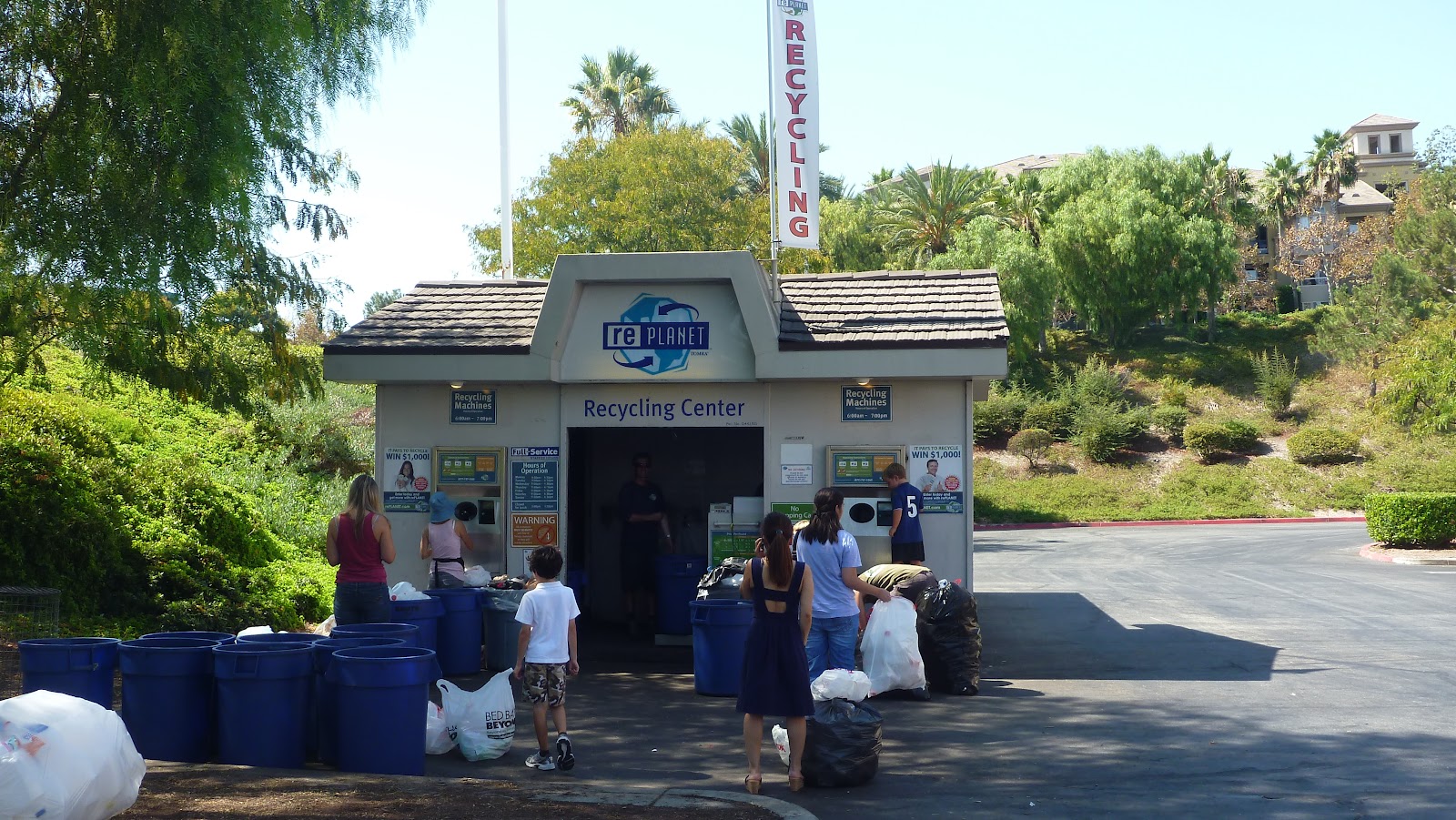
Mean and Green and Bad – On CA Recycling


To find a compelling argument against the environmentalist movement, one must look no further than the Californian Beverage Container Recycling Program.  Like Obama’s proposed Christmas tree tax, it’s an insignificant but also avaricious and ineffective measure to legislatively sway the behavior of the American citizen.

CRV (California Refund Value) is a tax on recyclable drinks that was instituted by George Deukmejian in 1986 and championed by Arnold “The Governator” Schwarzennager through his two terms.  In an effort to spur the practice of recycling in the already communist state of California (San Francisco has outlawed Happy Meals, Los Angeles wants to impose population control, plastic bags are banned in various places across the land, and Jerry Brown wants “the rich” to pay even more taxes so that pension recipients can continue to get checks for $250,000 from the government), the ecologically obsessed legislature allowed consumers to redeem this 5-10¢ fine by taking their bottles and cans to a recycling center.  So, while this CRV is technically a kind of sin tax on wasting resources, the consumer has a chance to cleanse himself through washing by John Connor the Baptist in the holy river of Replanet.  And you wonder why Michael Crichton called environmentalism a religion.

There are several arguments to be made against this frivolous program.  First of all, this toll is completely unconstitutional.  The government can only tax an individual when he acts, and CRV is clearly a tax on not recycling, or inactivity.  Like Obamacare and Romneycare before it, the CRV program merits condemnation primarily because it’s a gateway to a throng of other corrupt indirect taxes.  If the government can tax you for not recycling, they can also tax you for not planting a tree, which highly credible animated kiddie movies tell me are being hunted to extinction by evil capitalists to make luxurious garments we don’t need.

Secondly, this tax functions like a bevy of other liberal proposals which end up punishing the innocent for the wrongs of the guilty.  In the same way that liberals try to confiscate the weapons of innocent Americans for the crimes of a few mass-murdering madmen, the Beverage Container Recycling and Litter Reduction Act (let’s call it ReCal for short) penalizes those who recycle their materials at home for the perceived moral transgressions of those who don’t recycle at all.  Conservatives are also susceptible to faulty logic like this.  Instead of laying harsher sentences on those who abuse marijuana consumption and harm others, they ban the drug entirely as if it's responsible for the injustice, moving it to the controlled substances list.  But that’s an essay/debate case for another time…

Third, the program carries a huge price tag for California while bringing citizens no tangible benefit whatsoever.  The cost of the BCRP, enforced by the Department of Resource Recycling and Recovery, exceeds an estimated $1.05 billion (http://www.calrecycle.ca.gov/BevContainer/RecycleFund/2012/JulStatus.pdf), almost 1% of California’s expenditures.  Further, this 5-10¢ incentive doesn’t even work, which is the fourth point.

ReCal is the one of the environmentalists’ most inefficient and time-costly ways to force their beliefs on others.  Most recycling centers have a total of 2 machines which can be accessed at any time.  An assistant usually accommodates a third customer.   Most often, the people currently using the machines have 5 or more massive black bags they’ve been hoarding for months, all of which they must empty before they leave the site.  Moreover, these people are excruciatingly slow, moving at a rate of 12 bottles/minute*.  Dividing 1200 bottles and cans** by 12 leads to the revelation that those at the front will be hogging the machines for well above 1 and a half hours.  Most people have other things to do, like work, besides standing in a line for an afternoon, so the machines are clearly not a viable option.  You have the alternate choice of waiting for an assistant to help you, but this only works from 9 to 4:30, and the employees usually take lunch breaks.  Oh, and you must account for the contingency that they’re not accepting glass, aluminum, or plastic.  Half the time, at least one of these materials will be rejected.  If you do manage to reach the assistant before the place closes, you’ll be given two options: weigh your recyclables and lose a substantial portion of your money or have the employee count 50 each of your booty and send you to the back of the line out of consideration of the other guests’ time.  For some reason, Californian logic concludes it’s reasonable to weigh 1000 of a customer’s bottles in a row, but unfair to count even a 100 bottles at a single time.  Anyway, the counting technique also fails at returning your money, because the employees frequently miscount by a quarter-dollar or more.  I know this because I take 5 minutes to carefully count my recyclables, distinguishing between 5 and 10 centers, before the employee consumes all of 2 minutes counting the same items, assuming them all to be 5 centers unless they’re well above 24 ounces.

Thus, it’s apparent that in recycling you’re damned if you do and you’re damned if you don’t.  If you don’t, you never reclaim the countless nickels and dimes that the government has stolen from you for the luxury of drinking out of a container.  If you do, you will lose several hours of your life that could be better spent at a higher-paying job which actually produces income large enough to feed a family.

If I could formulate a single argument in favor of the BCRP, I’d say that it gives the homeless an avenue for generating income, but then ReCal would be little different from any other state-sponsored welfare system.  ReCal is like food stamps in that it redistributes money from those who work for their own lunches to those who expect the same meal for free.  For certain, many homeless people desire to find work so they can be independent and self-sustaining, but Beach Beer Can Collector is hardly the dream “career” they envision.

Liberals repeatedly make ambiguous calls for a separation of church and state; they should start by repealing the ineffective and useless laws that respect the church of environmentalism.

* This varies depending on the age and gender of the recycler.  Women usually take longer than men, depositing a bottle every 4-5 seconds.   Men are quicker, working at a rate of 1 bottle/3 seconds, sometimes 2 seconds if they’re experienced. Older people are generally much slower than everyone else, being retired and having no other business to accomplish on any given day.  These are all generalizations I’ve made from many hours spent at the center.

** This is a slight exaggeration to make the division simpler.  The average number of containers people recycle is probably closer to 1000, still an humongous quantity.