Wednesday, December 14, 2011

The classical comparison essay - Macbeth and Richard the Third

My latest work for Classical Writing serves as a sort of double invective, denouncing two of Shakespeare's greatest, or worst depending on how you use the word, villains and comparing their crimes at the same time.  Please do not take offense at my bashing of Richard; I only condemn the literary character that Shakespeare invented, not the historical king.

Two of cruelest villains Shakespeare created were Macbeth and Richard the Third.  Although their core characters and progressions to infamy were vastly different, the atrocities they committed were equally repulsive and similar in tragic consequence.  Both men were murderers without conscience, and their tyranny eventually drove their former friends to murder them in the name of justice.  Indeed, the wicked deeds of both kings deprived them of any friends they once knew, and the only allies they retained they kept through fear.  It is hard to discern which of these monsters was more despicable, as they both deserve eternal suffering for their crimes.

Macbeth’s origins in the play are mostly unknown, although the real-life Macbeth was the grandson of a king, Malcolm the 2nd, and was married to a woman named Gruach, the granddaughter of a High King of Scotland.  Richard the Third was the brother of King Edward the 4th, and his claim to the throne stemmed from that link, even though the throne rightfully belonged to young Edward the 5th.  The important fact is that neither Richard nor Macbeth had a true right to their kingdoms, and they had to resort to evil schemes to capture their power.

Macbeth’s initial character is far different than Richard’s, because Macbeth begins as a brave leader in Duncan’s army, whereas Richard is a total, unmitigated villain in every aspect.  Macbeth’s downfall comes from hearing the prophecy of The Weird Sisters, who promise that he will become King of Scotland.  This ignites hiss ambition, but he still refrains from murdering Duncan.  Lady Macbeth is the one who ultimately spurs events into motion, when she questions her husband’s virility for quavering from the bloody task.  Macbeth then cowardly stabs Duncan in his sleep to appease his raving wife.  Macbeth allows his wife to control him through his weak personal resolve and his greedy ambition.  Richard, in contrast, plots and executes all his crimes of his own accord, and indeed confesses at the very beginning of the play, “I am determined to play a villain… Plots have I laid, inductions dangerous, / By drunken prophecies, libels, and dreams, / To set my brother Clarence and the King / In deadly hate, the one against the other.”  The chief difference in their characters is that Macbeth evolves into a villain, but Richard assumes that position from the very beginning.

Both villains acted upon the same motivations and carried out similar injustices.  Richard and Macbeth had illegitimate claims to their countries’ thrones, which they believed justified their violent methods to obtain the crown.  This false idea led them to commit several brutal murders, aimed both at personal enemies who provoked them and also at innocent bystanders.  Richard’s list of victims is too long to read in full, but it included his brother, nephews, and wife, in addition to his political adversaries.  Macbeth first slaughtered Duncan and his guards, then hired some murderers to eliminate his friend, Banquo.  Neither of these attacks was warranted, but even more reprehensible is his savage removal of his rival Macduff’s wife and son, who had done nothing at all to incite his wrath.  Macbeth was right before he turned to corruption, when he said, “I dare do all that may become a man; / Who dares do more is none.”  The actions of Macbeth and Richard go beyond those of a true man, and as Macbeth suggests, these murderers are not true men, but monsters.

In the end, it’s hard to determine which of the characters is more hateful.  Richard is a natural villain, and admits so in the play’s very beginning, so the audience can summon no sympathy for him. Macbeth, on the other hand, shows noble qualities in the beginning before succumbing to greed and corruption.  This renders him a more sympathetic character for a short while, but his subsequent betrayal of his closest allies only makes the audience despise him more.  Richard disturbs the audience, and Macbeth repulses them.  Neither can hope for redemption, as Macbeth poetically contemplates that no power in the world can erase the impact of his sin.  “Will all great Neptune’s ocean wash this blood / Clean from my hand? No: this my hand will rather / The multitudinous seas incarnadine, / Making the green one red.”

Tuesday, December 13, 2011

Movie pre-production: Santa is ______

A burglar
"A white spherical thing that's full of..." (it's an insider joke)
A heretic
A false idol
A radical terrorist of infants
A discriminator against the poor or "The King of Favoritism" (Jason Call)
An animal abuser
A slave-driver
The Antichrist
The Devil's Claws
A wearer of The Lord's blood (Jason Call)


As the advent season and with it Christmas break approaches, I am preparing to initiate the writing of the most spectacular and original film that you will ever witness, The Winter Holiday.  Being as brilliant and humble and sarcastic an author as I am, I am fully capable of seizing the task alone if the situation demands that, but I would gladly accept and enormously appreciate any help that my loyal readers extend to me.  How can you do so?  The first and only requirement is to be a Santa Claus/Satan Claws hater.  If you want to assist in the creative development of The Winter Holiday, you must wrack your brain to discover either a negative characteristic of the man in red or an ominous title for him.  I've already brainstormed 10 vices which can be attributed to Santa Claus.  If you do come up with some crime I haven't already listed, leave it in a comment to this post in the form of "Santa is fill in the blank", and it could be reflected in the final draft of the screenplay for The Winter Holiday.  I'll also be updating this post with all the ideas that you provide; if you leave a name besides simply "Anonymous", I'll credit you for the addition to this list, and you'll be recognized for your contribution in the credits of the movie, if I ever actually make it.

If you have any questions about the movie regarding its story, theory, budget, or its minute possibility of being produced, leave a comment and I'll answer to the best of my ability.  If you're the nephew of a certain Cameron, Nolan, Scorcese, or Spielberg, live in Southern California, and want to work on the special effects, cinematography, costumes, or whatnot, feel free to inquire.  If you want to have a spirited debate with me as one who genuinely finds no reason to oppose Santa, the Easter Bunny, or the Black Friday Turkey, or if you want to discuss with me the growing movement to separate religion and Christmas, leave a comment in my last post containing the classical invective essay.

Sunday, November 20, 2011

"Believing" In Santa

This essay was made possible in part by the excellent tutoring of Mrs. Weitz and the unparalleled writing course by Mrs. Jacqua.  Classical Writing, how I love thee.


Whenever a figure replaces the true God in any way, time, or place, it becomes an idol, and the 2nd commandment proclaims that no man shall make for himself a false idol.  Yet every Christmas season, the modern world worships an idol by the name of Santa Claus, who has effectively taken over the spotlight during the holy day.  The meaning of Christmas, so named for the birth of our wonderful savior Jesus Christ, is overshadowed every year in hundreds of millions of households, and popular culture takes the place of religious faith in the minds of innumerable children.  It is for this reason that Santa Claus is the most threatening idol to Christian values in history, for aside from his shameless theft of what used to be a holy day of commemoration and celebration, he is also guilty of other minor crimes.  If an idea can burn, there should be a massive bonfire prepared specially for the Claustian movement.

Contrary to popular belief, Claus did not for the most part originate from legends told about Saint Nicholas, who was a very godly and pious man.  Santa’s roots come more from Dutch folklore and a European legend called Sinterklaas, who is almost as evil as Claus himself.  Sinterklaas in turn is based on several old stories told about the 4th century saint, but there is little reason to believe that the tales of the Nicholas’ charitable giving at Christmastime are true.  In any case, the Saint Nicholas stories were taken and applied to Sinterklaas and Santa with a twisted result.

The character of Santa began to surface in the 19th century, in the drawings of an artist named Thomas Nast.  At that time, he was called Father Christmas, and the character of Santa would grow from his image.  Santa is generally recognized as a fat, bearded man who wears red and rides in a sleigh pulled by flying reindeer.  He is renowned for climbing down the chimneys of homes all around the earth and distributing gifts on Christmas Eve.  Good children wake to find toys and other delights in the stockings they hung over the fireplace, but “naughty” children only receive coal.

Santa Claus is an abominable character not only as a perceived hero, but also as an idol.  Firstly, Claus is a beacon of gluttons; the cause of his abnormal size is never explained in fairy tales, but one can assume that he attained it just as any other obese man has, through poor eating habits and laziness.  Despite his embarrassing physical shortcoming, society still worships Claus as a role model, which sends a deceptive message to children who look up to him.  This, however, is the least of Claus’ sins, for in his Inferno Dante Alighieri wisely placed the souls of the incontinent above the heretics, because the sins of gluttony are not as perverse as heresy, a crime of which Claus is also guilty.  Santa Claus’ discrimination in deciding which children are naughty and nice assumes that the more sinful of human beings are unworthy of receiving a gift.  The tradition of Christmas gift-giving of course stems from the Gospel, in which God gave mankind the best gift of all, His Son.  No man is without sin, and all men need salvation, but in sending Christ God offered to save even the most sinful as long as they believe in Him and the Trinity.  On the contrary, Santa Claus as a god-figure selects which children he believes are worthy of reward on Christmas day, and dismisses whichever he disapproves of, and this preaches a false message to Christian youths about the reality of God and man’s salvation.  It is well known that many children are susceptible to the lies associated with Santa Claus, but even some adults are likely to be misled by this heretical philosophy.  Yet even this transgression by Claus and his followers pales when juxtaposed with the very fact that Santa has replaced the one true and holy God on a day which is meant to honor Him.  Christmas has always been devoted to commemorating the birth of Jesus Christ, but modern popular culture has manipulated the date into something else entirely, the celebration of an idol.  A waltz into a retail store at Christmastime reveals hundreds of Claus-related products on shelves, but nary a sight of Christian symbols.  Nearly every Christmas television special focuses on Santa Claus or other mythical figures rather than the holiday’s true meaning.  For this primarily and a host of other reasons, Santa remains uncontested the greatest threat to Christian values in the modern world.

The belief in Santa Claus is often compared to the outrageous myth of the Easter Bunny, but the latter is not nearly as offensive as Santa Claus.  Both figures were invented to shift the focus of their holidays to a false idol, but the media have never embraced the Easter Bunny as they have Santa Claus; to that degree, then, Santa is more dangerous.

One could denounce even further the subtle heresy of the Claustian theology, and speak to exhausting lengths on the incivility of intruding on people’s property, but the idol’s greatest crimes have already been exposed.


And, just so there's no confusion, I actually mean what I say in this invective.  Satan Claus is a demon who ought to burn in Inferno where he belongs.  That's why I'm writing a shockingly original and controversial science-fiction dystopia film about him and his followers.  The greatest downside of living in Southern California, besides losing to Democrats every danged election cycle, is that you can't really shoot a winter apocalypse picture without simulating a snowy environment...


Concerning idols, after watching the first 10 minutes of Never Say Never (and only the first 10 minutes), I have to say that this Justin Bieber fellow ought to retire from the media spotlight, if not guard his soul, then at least to protect those of some others, for there are thousands, maybe millions of girls out there who figuratively worship him as a deity.  It's really rather sad; he's a self-proclaimed Christian, but he could be the doom of many an adolescent girl.  I'm not saying that you can't admire him or listen to his "music" (although I strongly discourage the latter); I'm only making the point that some people follow him to such an extent that it's a form of idolatry.  And no, I don't think he made a baby, baby, boooooo...

Tuesday, November 15, 2011

Happy birthday, Halo

Here's to the greatest video game series objectively of all time.


I LITERALLY cannot wait to play the original rendition of this franchise.  No, really, I'll LIKE LITERALLY die if I don't pick up my copy of Halo Anniversary on launch day.  (Are you picking up on my valley girl sarcasm here?)


But seriously, Halo is definitely the best thing that ever happened to console video gaming.  The saga as a whole has the greatest production value of any video game series ever, and while you play through the campaign you feel as though you're influencing the outcome of a high-quality science-fiction epic, rather than merely shooting up alien scum in a poorly plotted FPS mess with one-dimensional heroes.  Weighty themes permeate the series, including soldier augmentation for pragmatic purposes, immortality, genocide, indoctrination into war, courage in the face of immeasurable fear, and heck, even a few Biblical references are thrown into the story.


Halo 3: ODST didn't take itself as seriously as the trilogy or Reach, and its method of nonlinear storytelling through flashbacks was actually highly effective.  The game felt more like a noir, mystery movie than its predecessors, with a little bit of Hollywood quality visual effects thrown in for good measure during action-heavy sequences.  It didn't hurt that the soundtrack was exhilarating.  This installment was incredible, and second only to Portal 2 as the most cinematic game I've ever played.

So let's celebrate ten years of the wonder that has been Bungie's Halo.  Now if I could only secure my weekend again in the frenzy of this TP debate world...

Saturday, August 27, 2011

The 10 Rottenest Tomatoes

Notice: kind of outdated as of 2014.  I have endured a crapload of cinematic trash in the two and a half years since this was first posted.

I've seen two particularly bad movies this month, which have together prompted me to compile my official worst-of list for films.  Allow me to show you my bottom 10.  Some disclaimers before we proceed: All of these movies must have been released to the public in theaters, otherwise every single Disney Channel "sitcomovie" would be on this list.  This is only a list of movies I've seen; that's why Arthur Christmas and Spy Kids 4D aren't on here.  I have judged these movies by motive first and execution second, so while Wall-e certainly looked better animation-wise and had better sound effects than some of the movies lower on this list, it sought to offend audience members and belonged higher on the list.  Astro Boy wanted to brainwash kids, while Clone Wars only wanted to entertain them; therefore, Astro Boy belongs higher.  If you know any movies you think belong on this list, shoot me a comment and I'll NOT check them out.

1. Astro Boy
This movie was not just technically horrendous, it was philosophically wrong and appallingly pagan.  The animation, plot, script, score, and voice acting were all bottom-notch, but the filmmakers also decided to send the message to kiddies that robots, man-made, unemotional objects, can be just as pure and noble as human beings, who are created by God.  In fact, in Astro Boy’s case, they can actually surpass human beings, and fire machine guns in their butts!  Heresy.

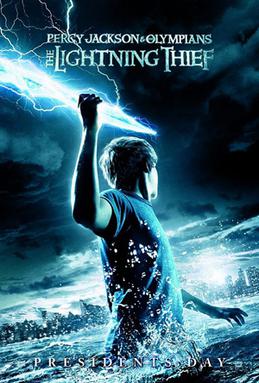
2. Percy Jackson and the Olympians
Whose idea was it to make a PG-13 (should have been), sex-and-violence-packed movie out of an already junky children’s book?


3. Happy Feet
We humans are so environmentally evil and irresponsible we needed an animated movie about singing/rapping/dancing penguins to enlighten us as to our wrongdoing.  This love letter to Al Gore was painful to the eyes and the ears.  The 2nd incarnation of this bomb looks even worse with a global warming theme.  Spare the kids from the heathen indoctrination.

4. Wall-e
Once again, good robots solve for evil, irresponsible, polluting humans’ problems.  Pixar also constantly reminded Americans of their obesity issues throughout this “film”.  I remember that this movie looked appealing to eyes (though not nearly as detailed and colorful as Kung Fu Panda), but the depiction of humanity and undisguised attempt to make viewers feel guilty about themselves is unforgivable.

5. The Day the Earth Stood Still
I wouldn’t consider this as bad as some of the other films on the list if it weren’t based on a 1951 classic of the same name.  This Keanu Reeves remake completely changes the meaning of the original film, which was about man’s disposition to fear and distrust all strangers, and turns it into a simplistic and preachy environmentalist picture where the alien Klaatu is sent to eradicate all human life with the goal of saving the rest of Earth.  I remember Keanu (a sub-par actor, by the way) telling a scientist something like this: “If you live, the Earth dies.  If you die, the Earth survives.”  Being ordered to recycle during a movie is not my idea of entertainment.

Oh, and the behind-the-scenes features on the DVD show the special effects people setting a real car on fire and pulling it across a grass field.  Ethan hypocrites.


6. The Seeker
Another awful movie marketed at kids.  I think I was 12 when I read The Dark is Rising and wrestled my grandmother into taking me to see the Hollywood adaptation.  I wish I saw the trailer first.  “Based on the name of the main character of the book.”

7. Never Say Never Again
This has to be the worst James Bond movie ever made.  My dad and I used the fast-forward-button most readily, simply because the movie is extremely boring and loaded to the max with unnecessary footage.  I could honestly cut this action-and-adventure movie down to 15 minutes or less, and that's because we get one gratuitous sex scene after another with no character development in the long run for Bond, his date(s), or his nemesis.  Bond remains a womanizing loser throughout the whole movie, his women remain 1-dimensional hotties in (or out of) swimsuits, and the villain (who's arguably no less admirable than Bond) is a completely forgettable bad guy without any interesting motive, other than the usual, stereotypical desire for riches and power.  Also, for a James Bond movie, there's hardly any action.  I remember at most 5 action sequences in this movie, and none lasted for more than 5 minutes.  The special effects are pathetic as well.

(The poster isn't appropriate for my PG, occasionally PG-13 blog.)

8. Transformers: Revenge of the Fallen
This was an obscene, licentious, ridiculously profane piece o' poo, which Dreamworks dared to market towards children under the age of 13.  All of the first movie's charm was replaced with unnecessary cussing, disgusting sex, nearly incessant OMGing, racist Jar Jar Binks sidekicks, and tiresome documentation of the escapades of unremarkable, deviant college students, in a movie supposedly about transforming robots.

9. The Last Airbender
This movie is an unmitigated disaster, and boasts probably the worst acting in film history.  The kids don’t so much play their parts as recite their lines in front of the camera in an always dull, emotion-washed voice with minimal adjustments in facial expression to express surprise, confusion, or happiness.  Admittedly, they’re not given much to work with, as the script is pathetic, loaded with corny dialogue and protracted explanatory speeches about the history of the Avatar world.  I.e., we don’t actually witness on film the fire nation declaring war on the other 3 tribes and terrorizing the land; we only hear Aang’s belabored explanations of those events.  Here’s one of Airbender’s cheesier conversations:
Aang: Do you have a spiritual place where I can meditate?
Moon-fish-girl: Oh, yes, we have a VERY SPIRITUAL place.

The Author’s remedy for this corny and repetitive dilemma:
Aang: I need to meditate.
Moon-fish-girl: We have just the place.

Exchanges like the one above combined with horrible acting – oh, and some dreadful dancing – did manage to garner some unintended laughs from me, so I do recommend renting Airbender (only for free!) if cheap entertainment is desired, despite its standing as one of the worst movies ever made.


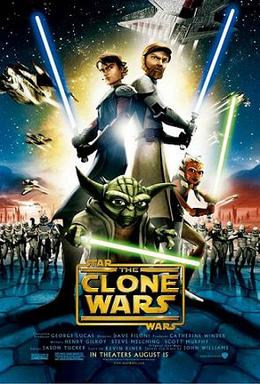
10. Star Wars: The Clone Wars
Rather than putting this in theaters, George Lucas should have just made this the pilot to the Clone Wars TV show (which is unbearably corny).  This movie and The Last Airbender are on similar ground, but The Clone Wars is worse because it was based on good source material and had cinematic potential.  The Last Airbender is based on the first season of a rather cruddy Nickelodeon anime series (sorry, Blake), and thus has more room in my heart for forgiveness.  Edit: The Last Airbender was given a worthless 3D downgrade, and is guilty of robbing some gullible audiences of an extra 4 dollars.  Airbender's worse on that account.

Dishonorable mentions

Planet of the Apes (2001)
Just watched this a few nights ago.  Review hopefully coming soon.  Précis-review: Tim Burton’s Planet of the Apes is a jumbled mess of poor cinematography, weak characters, cliché plotline, and corny references to the 1968 classic.  By giving the human characters speech, removing the themes of evolution, and making the apes only superior to the humans in their strength, not intelligence, the story is also stripped of all the drama it previously possessed.

Prince Caspian (2008)
A Disneyized retelling of C.S. Lewis’ powerful novel, this butchered all the theological themes presented in the book.  This brilliant article superbly summarizes my feelings about the book. http://circeinstitute.com/2010/12/subverting-narnia/

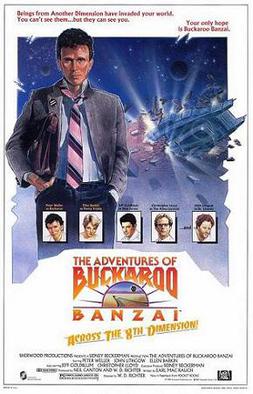
The Adventures of Buckaroo Banzai: Across the 8th Dimension
Who knew that a character with such an incredible name like Buckaroo Banzai could be given such a laughable treatment of a movie.  Buckaroo Banzai is an 80's cult "classic", and it definitely falls into the "so bad it's awesome" category of films.  Who exactly is Buckaroo Banzai?  Well, I wish I could tell you, but the movie does a really poor job of explaining who the heck its protagonist is and what his occupation is.  Wikipedia describes Buckaroo as "a renaissance man, a top neurosurgeon, particle physicist, race car driver, rock star and comic book hero."  While we were watching the film, my dad suggested to me that maybe the movie was just a big insider's joke for readers of the Buckaroo comic books.  Oddly enough, Buckaroo Banzai was made to sell comic books, not the other way around... anyway, the movie, largely bereft of any sort of plot structure or character development beyond the presence of a hero and a villain, boasts plenty of shaky camera, unexciting action sequences, cheesy alien makeup (there's also a brain thingy in the beginning and a slug-creature later on), dialogue so corny it's often outrageous ("Laugh a-while you can, monkey-boy."), hysterically bad cinematography work (Close-ups of Buckaroo's eyes and mouth during a torture scene in "the shock tower"), abysmal CGI, an unfitting soundtrack, and a nearly incomprehensible story line.  How can I enumerate all these flaws but still leave Banzai out of the bottom 10?  My reason is that Buckaroo Banzai is a true joy to watch.  As I stated earlier, it's so bad that it's awesome.  It's definitely worth a recording or rental if you're feeling down and need to smile.  It's just a shame that director W.B. Richter didn't make enough dough to helm the sequel promised before the film's credits.  As far as comic book heroes go, Indiana Jones was far more popular in his own time.


A Dog of Flanders (1999)
Star Wars meets "a boy and his dog" story.  It boasts one of the cheesiest plots ever, and the camera work looks as though it was done by a 5 year old.  Just watch the dance in the gypsy camp.  I chuckle at the memory.


Madeline

A kiddie story about, well, something trite having to do with girl power. Here's my summary: a mischievous British girl outwits and escapes a pair of bumbling dog-catchers-turned-kidnappers, who end up driving into a river and getting all wet.

All the original Star Trek movies (yeah, even Kahn)