Sunday, November 8, 2015

100-something Movies You Should See If You Like Movies: M-P

Continuing a dynamic and somewhat subjective list of truly excellent movies for people who like all kinds of movies.  For a more thorough explanation of the methodology behind these recommendations, check out part 1 here.  Newer entries will be labeled u1, u2, u3... uX depending on when I add them, so use your internet word searcher and check back in several months to follow my ongoing chronicle of the best that Hollywood has to offer.  Links to other sections are appended at the bottom.

Mad Max: Fury Road –

My dad’s remarks upon the credits roll were something like, “Wow.  That was two hours of crazy.”  Who could have summed it up better?  As with Edge of Tomorrow, you can condense pretty much the whole plot into two separate lines of dialogue.  Why does George Miller keep making these films 35 years after the one which he made on practically no budget and almost nobody has seen?  Maybe he regards it as his duty to absolve the action genre of its many modern transgressions.  If the old guy can’t fix what’s broken, he’ll go insane.  What a movie.  What a lovely movie.

Mars Attacks –

This probably doesn’t belong on the list because it really wasn’t that funny, practically speaking, and Natalie Portman’s acting stinks, but I once wrote a pretty thorough breakdown of Mars Attacks’ cynical, realist political themes contrasted with Independence Day’s liberal, pacifistic idealism, so I’ll use this newer, lazier article as an opportunity to pimp my older, much more detailed article.

The Matrix –

Because what list would be complete without it? Your list is already dead.

May (u1) –

I got a little carried away working my night shift and accidentally wrote about a page of commentary on May in coincidental enthusiasm and boredom. Suffice it to say that May is a delightfully oddball yet also reflective horror film about isolation, female sexual desire, and obsession with aesthetics. It’s probably not for everybody, but those for whom it is are certain to love it.

Memento –

I really want to write about this one in more depth. If someone asks me what my favorite movie ever is, I usually refer them to Memento, but now that I have this list I need not do that anymore. Now, where was I?

Memories of Murder (u1) –

Memories of Murder is unlike any movie you’ve ever seen, unless you have seen Mother. This may be the best entry point to Korean New Wave cinema, intermittently hilarious, suspenseful, and dizzying in its presentation.

Men in Black Trilogy –

If someone mentioned Will Smith to me three years ago, I’d instantly associate him in my head with Men In Black. Then Will Smith decided to have kids and become Obama’s little whiny female pug dog. What a shame. All three of these are hilarious in a weird and nonconformist way. The writer and director of Men In Black would go on to produce and partially direct the short-lived cult television series Pushing Daisies, a most delightful program no one cared for until its second season was lying in the coffin.

Midnight in Paris –

Midnight in Paris could easily have been a cheesy, exploitative romantic comedy weighed down by too many celebrities, time-travel gimmickry, and tourist destinations gratuitously snuck in for advertising, but instead Woody Allen made a funny, pensive, and appropriately pretty film about a screenwriter going through an Existential Crisis and reevaluating his blind romanticizing of the past. Though it concerns unfulfilled love, defeatism in artistry, and inter-family squabbles, Midnight In Paris doesn’t mar its light tone with a lot of made-up movie conflict, as the story’s mostly about Owen Wilson thinking that he wants one thing, thinking he wants another thing, and finally coming to terms with what he really wants.

Minority Report –

The music in Minority Report is really disappointing, too often sounding like fill-in, generic John Williams background scoring. I don’t think I can say anything negative about the film besides that, given how accurately and humorously it skewers recent ‘advances’ in individualized marketing and the surge of the surveillance state in a probably misguided, certainly mismanaged War on Terror, all while investigating big philosophical questions about free will and its relationship to foreknowledge. Everybody runs, John Anderton.

Moana (u1) –

I will admit that Moana is far from a perfect movie. In fact, I could probably fill a page or two with things I would change in it – some irritating lines of dialogue, a lame song in the middle act, the way her hair never stays wet very long. It’s also the first Disney movie in a really long time I can envision myself watching over and over again without getting bored, like Shrek or How To Train Your Dragon (both of which it resembles a lot), as well as the first Disney movie in a while that didn’t have some severely dating social agenda to grind and just contented itself with telling a good story about two people learning to respect each other. I’m still in shock at just how great it was. I. Am. Moanaaaaa.

Moon –

Moon is irregular, slow-burning speculative sci-fi that emphasizes sympathetic characters over action, potently asks what makes one human, and examines the justifications one group makes for harnessing another to its profit. It’s also an incredible one-man show for Sam Rockwell if you care about that sort of thing.

Moonrise Kingdom –

Young love and khaki scouts realized through the whacky mind of Wes Anderson. I totally want to ask some girl, “What kind of bird are you?” Then I’ll know if she has good taste in movies.

Mother (u1) –

Mother is unlike any movie you’ve ever seen, unless you have seen Memories of Murder. Of the two, this one packs more of an emotional punch and may linger longer for that reason. Bong Joon-ho cleverly builds the end into the opening credits, but one can’t understand the significance of it until the story has run its breathtaking course.

My Cousin Vinny –

Marisa Tomei stole George Costanza’s heart in this comedy and continues to steal the hearts of Boss Men watching it for the first time 25 years later. “She’s my fiancé.” “Well, that would explain the hostilities.”

Napoleon Dynamite –

Napoleon Dynamite isn’t typically categorized as great art by people of any persuasion, but you know by the time The Promise rolls that you’ve borne witness to something whole and something freaking sweet. Lucky!

Nightcrawler –

Everybody knows that Jake Gyllenhaal got robbed for best performance of the year, but Nightcrawler would still be gripping and provocative without his maniacal presence making it that much darker. Using a little explored or contemplated aspect of local crime broadcasting, Nightcrawler undoubtedly casts a shroud of sadism and exploitation over the integrity of journalism but goes even further by dramatizing the obsessive drive of human beings to create the finest, most arousing and impactful version of their craft, regardless of the human suffering they enable or ignore thereby. Nightcrawler’s level of violence isn’t that extreme in the big picture, but the utter callousness with which Gyllenhaal’s Lou treats it renders this one of the more outrageous and gripping thrillers of recent times, one that instantly earns its place alongside Taxi Driver as one of the great Crazy Guy classics. Nightcrawler is much more morally concerned than Taxi Driver as a story, though, and so I found it even more enthralling.

Pee Wee’s Big Adventure –

One of the most peculiar and entertaining comedies ever. Andy? ANNNDDDYY!

Perfect Blue (u1) –

I will admit up front that I don’t admire Perfect Blue as much as some other movies on the list; in fact, one might view its inclusion as a kind of affirmative-action for alternative animations. But here we have to ask if affirmative-action is even inherently bad when it comes to cinema. If it’s good enough for the Oscars (and we all know the Oscars have never, ever honored crappy movies), then it’s good enough for us. Regardless of politics, Perfect Blue is still an entrancing thriller by all measures, whisked along by jarring transitions, freakish animated imagery, desperate violence, and a perspective that keeps getting more and more unmoored from reality as we know it. If you’ve already seen Black Swan, you should feel obligated to watch the crazier, more visionary original that inspired it. I should also note that this isn’t a movie to watch in public or with judgmental people, unless you don’t mind people thinking you’re weird.

Perfume: The Story of a Murderer (u1) –

Perfume can aptly be described as the anti-Les Miserables, employing much of the same apparel and décor but designed to polarize, repel, and offend. The sensualist movie manages to be at once massive in scope and incredibly tactile, and like Les Mis it’s highly musical, though it aims to be more eerie and haunting than anything else. For a great (and funny) video further extolling Perfume, albeit by sampling scenes taken from very late in the film, check out Twin Perfect’s video on it here.

Possession (1981) –

It’s really late in the evening/early in the morning, and I’m pretty certain neither I nor anyone else will ever understand what director Andrzej Zulawski was trying to say in Possession, so I’ll keep this short. Suffice it to say this film is way too abstract, illegible, and grating on the ears for 90% of viewers, but an equal proportion will also be revolted, mesmerized, and horrified by its scenes of absolute, out-of-control demonic torment, so in my mind it did exactly what a movie with a name like Possession should do.  By all means, though, feel free to hate upon it.

The Princess Bride –

One of those old movies that was actually better than the book, you know, back when books were kind of good. I’m kidding, of course. There have always been bad books. The Princess Bride just showed a little more effort than the rest of the bestsellers at its time.

Prisoners –

Once you do something you know is really wrong, it’s hard to do the thing you know will probably set it right. Prisoners’ crime mystery seems shoddy in a lot of places upon closer contemplation, but the phenomenal acting, direction, and cinematography more than compensate for its scattered logic holes.

Punch-Drunk Love (u1) –

Does choosing the Adam Sandler-starring Punch-Drunk Love as my only essential P.T. Anderson flick over The Master or Magnolia or any of his more serious movies make me a simpleton? Maybe it does, but The Master and Magnolia only really succeeded in making me bored or angry, and there are lots of other movies that induce me to anger or boredom. On the contrary, there aren’t a lot of movies that made me feel quite the same as this, thanks to Jon Brion’s incomparable score, the unhinged soundscape in general, and Sandler’s surprisingly convincing performance as a toilet plunger salesman with lots of unspecified issues. Punch-Drunk Love thrives upon the kind of cringeworthy situations and crippling anxiety that permeate a lot of the Youtube videos I consume, but does so in a commendably entertaining way. I would urge anybody who doesn’t appreciate its brilliance to watch the first thirty minutes or so of the movie Krisha, which aspires to do pretty much the same thing and ends up being the most excruciating thing I’ve ever heard.

Fast-travel to other parts:

Friday, November 6, 2015

In Which The Author Rambles On About James Bond

If you came here looking for my thoughts on Spectre, psycheth!  I’ll most likely be watching the latest Daniel Craig Bond entry this Saturday with some friends, and may or may not offer my critique depending on how mediocre it is and how much time I have.  If it turns out merely meh, I can probably still give it a Not Worth The Effort analysis.  In the meantime, here’s a flashback review of a much more antiquated and cheesy Bond film that I wrote roughly two years ago, minimally edited since then, and opportunistically released today.  Part 4 of the 100-something movie countdown will be out tomorrow once I watch a potential title and make up my mind on its merits.


“Intercontinental ballistic missiles and various other missiles, which have already set their striking targets, are now armed with lighter, smaller and diversified nuclear warheads and are placed on a standby status. When we shell (the missiles), Washington, which is the stronghold of evils, .... will be engulfed in a sea of fire.”

So said a rather cheery North Korean General Kang Pyo Yang earlier this year in a series of brazen death threats aimed by Kim Jong Un’s tyrannical regime against its neighbor South Korea and the United States. Whether or not the North’s ruling elites ever act on those threats by launching nuclear weapons into Japan or the South, so igniting World War III and immediately ending the lives of hundreds of thousands, and whether a handful of Aegis-equipped destroyers and measly Predator drones carrying NCRAP seekers have the capability to knock these missiles out of the air by shooting smaller missiles of their own, all without advance warning, remains to be seen.

Regardless, the North’s long history of gleefully violent rhetoric does provide an interesting angle from which to examine James Bond’s 40th or so adventure, Die Another Day.  Given the harshly strained relations and undeclared state of war between the North and South, it’s a supreme paradox that this movie is simultaneously one of the most and one of the least believable entrants of the Bond series, entirely plausible in its supposition that the North is eventually going to try to torch the South in its expansive quest for power, and entirely implausible in its imaginative conspiracy that the North will do so with a giant, Death Star-like magnifying glass orbiting the earth.  Die Another Day is the kind of summer action flick that’s so ridiculous and monumental in its staging that it will divide viewers into two overarching sets: those who will scoff and groan throughout the picture, ultimately dismissing it for its total absurdity, and those who will voluntarily suspend their disbelief for two hours to experience a pure cinematic roller-coaster ride which rarely surfaces in the Bond franchise.  I myself fall more into the latter group, but perhaps that’s because snoozers like Never Say Never Again, The Living Daylights, and License to Kill had formerly whetted my appetite for a Bond movie with action.

Played competently this time around by Pierce Brosnan, Britain’s iconic secret agent Bond has infiltrated the North Korean ranks at the movie’s start, though his ruse is exposed soon enough.  Hijacking a futuristic hovercraft designed by the North’s brilliant military technicians (which is only the first instance where the movie sheds all real-world credibility), he almost manages to make an impressive get-away across the DMZ, but the commies succeed in capturing him and subject him to a grueling 14 months of torture and sleep deprivation via an excruciating theme song by Madonna.  Whoever’s currently running the fun house at Club Gitmo should forget Sesame Street and start blasting “Die Another Day” instead, but hey, I’m sure 007 would take Madonna over Sam Smith any day.  The English finally trade Bond for a prisoner of their own named _____, who is destined to be one of three terrorists set on world domination that Bond will face off against in this episode.  That’s all you really need to know about the plot, which is paper-thin per the series’ norm but entertaining and well-paced nonetheless.

Halle Berry’s stupid, goofy-looking, grossly overrated bathing suit

I should briefly note that Halle Berry portrays the token love interest – or sex interest, as Bond himself admits that his relationships never last that long and that he has no time for anything beyond an obligatory one- or two-nighter –, but that’s supposing what she does in the film can honestly be described as a “portrayal”.  Completely inadequate for any role that requires her to convincingly read lines or simulate feelings of pain and passion, she makes her bore of an NSA agent (yeah, that’s the big twist – no wonder she screws up her mission and needs Bond to come rescue her) even more boring than the script otherwise allows and also lacks the hot factor necessary for the female sidekick’s part, which is really the only thing it demands.  Considering the notoriety this movie has attained among studious professors of swimsuitology in pop-culture, “Jinx” just isn’t all that sexy, in part because the truly sexy woman has more dignity and moral resolve than to allow a creepy stranger staring down her bikini bod through binoculars to bed her literally the first night after their meeting.  Halle here is a cat burglar with nothing worth burgling, joining the legions of other forgettable actresses who have shamelessly degraded themselves to get attention from a horde of willing accomplices in the celebrity-obsessed media.

Fortunately, she’s just a secondary attraction in a movie that’s chock-full of awesome and mostly impossible fight scenes.  Prior to watching Die Another Day, I would probably point to Mission Impossible 2 as the most ludicrous action movie I’ve seen outside The Matrix trilogy (which took place in a computer and thus had an excuse to be physically impossible), but James Bond makes blowing up the gas tank of a truck while doing a wheelie on a motorcycle look relatively believable with all the stunts he executes here, including but not limited to:
* faking a cardiac arrest in order to escape custody
* pulling a 180-degree spin on ice with his camouflage-enabled car to shoot missiles at a pursuer, then spinning right around again.
* outrunning a giant space laser in some kind of snow buggy, leaping from a collapsing cliff face, and paragliding right over a towering wall of waves

Does Bond kick a handgun out of the sand, grab it at chest level, and expertly shoot his armed rival down with a single bullet?  Swing around backwards to grab a handhold while rock-climbing without a harness at several thousand feet?  No.  On second thought, I guess Ethan Hunt still takes the cake for having the most incredible movie feat, and the second and the third too.  Regardless, Die Another Day is bloody amusing to watch and arguably compresses more memorable action sequences into a single story than the rest of the Bond franchise can claim altogether.  The special effects are pretty impressive overall for a 10-year-old picture of medium budget, despite the intermittent presence of some atrocious green-screen and CGI, most noticeable during the paragliding scene, and the bad guys all meet particularly gruesome and satisfying ends that may have inspired key plot points in The Incredibles and Captain America.  Die Another Day is fraught with camp but seems to be fully aware of that fact, as its writers pack a number of unnecessary speeches and terrible one-liners into the screenplay.

“Saved by the bell.” ~ Bond, upon saving himself from a precarious fall by jumping and clinging to a bell 
“I see you handle your weapon well.”
“I have been known to keep my tip up.” ~ Oh, Bond. 
“If you don’t hurry up, I won’t be half the woman I used to be.” ~ Berry, while strapped to a board and terrified of deadly lasers whirring close enough to cut her in half 
“That’s a nice fit.  I hope it doesn’t shrink in water.” ~ Unexpected villain, broadcasting her plot to murder the unexpected heroine with – you got it – water
“I can read your every move!”
“Read this…” Executes cool knife move.
(long pause as the gravity of what happened sinks in)

“… bitch!” ~ Because “read this” wasn’t a good enough punch line.

Undeniably silly, unapologetically over-the-top, and unusually entertaining, Die Another Day is easily the best James Bond movie I’ve ever seen thus far.  While that might be like contrasting The Wrath of Kahn with any of the other Star Trek movies or comparing the merits of Not-Dante’s Inferno to that of another Dan Brown novel, it’s a rare compliment that I extend to an entrant of this series, which, if Skyfall’s billion-something dollar gross means anything, will surely live to die another day.  Check it out if you get the chance, or click on all the video links above and save yourself a lot of time. Or don’t click on the links and save yourself even more time.

Friday, October 30, 2015

100-something Movies You Should See If You Like Movies: I-L

Continuing a dynamic and somewhat subjective list of truly excellent movies for people who like all kinds of movies.  For a more thorough explanation of the methodology behind these recommendations, check out part 1 here.  Newer entries will be labeled u1, u2, u3... uX depending on when I add them, so use your internet word searcher and check back in several months to follow my ongoing chronicle of the best that Hollywood has to offer.  Links to other sections are appended at the bottom.

Incendies (u1) –

The story of Incendies probably doesn’t look all that incredible laid out front to back on paper, but the genius of Denis Villeneuve’s possible magnum opus is that he doesn’t tell it front to back, staging what could have been a tiring melodrama or anti-war polemic as a gripping mystery.  The final moments are at once tragic, sobering, hopeful, and cathartic, but the movie lingers most for a four-minute, devastating scene in the middle, which stands alone as a complete story in itself and represents the unforgettable capacity of film.

Inception –

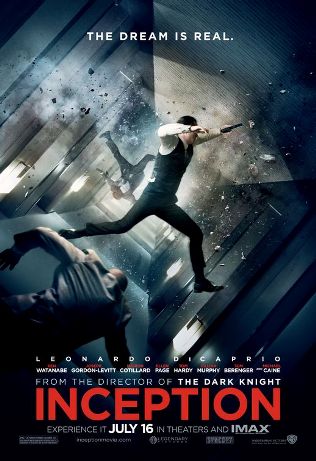
As twisty and complex as its sci-fi narrative is, Inception isn’t one of Christopher Nolan’s more thematically or emotionally powerful films.  It’s just a cool story about dream thieves navigating interesting manifestations of the subconscious, and a really cool one at that.  This is a movie marked by its tremendous scale—scale of sets, of score, of cinematography.  It’s the only movie where a guy runs down the walls of a hotel hallway and engages a security guard in a fistfight that covers every surface of the rotating set.  Top that, Stanley Kubrick.

The Incredibles –

The pro-American, anti-sameness, quasi-Randian parable which Brad Bird protests he didn’t mean to make and which I’m very glad he did.

Inglourious Basterds –

Overlong review here.  It’s probably not quite as glourious as I remember it, but damned if it wasn’t a massively entertaining and unsettling imagining of the more covert battles waged in World War II.

Insomnia (u1) –

An earlier and less expensive entry in the Christopher Nolan canon, Insomnia doesn’t depend on a mindblowing, 3rd act twist or IMAX spectacles to capture audiences, which has led to the woeful popular appraisal that it’s one of his weaker films.  Between it and Memento, Nolan proves his deftness at telling smaller stories with depth and grandeur, and Insomnia will make great supplementary viewing for any budding philosopher who’s struggling to understand Kant.  Edited to near-perfection (one shootout briefly exposes Nolan’s then-ungainliness with action), acted superbly by all, and shot in several beautiful northwestern locations, the movie deserves a lot more recognition than it’s received, which is why it’s going on the prestigious 100-Something Movies List.

Interstellar –

Is it about faith vs. humanism?  Individualism vs. utilitarianism?  Global warming alarmism or selfishness masquerading as social responsibility?  On a simpler note, is TARS the greatest robot personality since Wheatley?  And to think The Matt Damon has a higher Tomatometer score than this... there is no justice in the public’s appetite.

The Jerk (u1) –

In which Steve Martin is raised a poor, black child.  The Jerk may also feature my favorite usage of a ukulele in a movie.

Jurassic Park –

The movie hits its cinematic peak pretty early on with the iconic T. Rex attack before mutating into assorted chases of varying effectiveness, the better ones involving viciously clever girls and the inferior ones involving, well, a clever girl.  This is still the only Crichton adaptation besides maybe Westworld that I’d consider essential viewing, and that’s a bloody shame because his novels read so much like movies in the first place.  How did Sphere get to be so bland and cheap, especially with such charismatic stars as Dustin Hoffman and Laurence Fishburne?  I digress.  Let’s get back to good movies.

Kill Bill Vol. 1 Chapters 3 and 5 –

Kill Bill is not the finest script that Quentin Tarantino has penned.  Chapter 4 could have been cut out entirely and the dialogue is incredibly cheesy, exulting in its comic book tone and dropping R-rated words just because Tarantino’s 9th-grader brain thought that they sounded cool.  The movie’s still absurdly entertaining, vibrant, and well made.  The anime flashback sequence of Chapter 3 ranks among the best uses of animation in film and Yuen Wo Ping’s fight choreography in the hyper-violent Chapter 5 borders on jaw-dropping.

The Killer (u1) –

The soundtrack is terrible, but this is action movie gold, so pure in fact that given the state of current American action I would call it required viewing.

King Kong (2005) –

Yeah, the brontosaur things don’t look that great, and yeah, it doesn’t make much sense why Jack Black would tell the New York theater crowd that “these chains… are made of chrome steel!”  The rest of the film is beautiful, sad, and unrelentingly intense.

A Knight’s Tale –

Straight outta Guilderland, this is the movie that redefined our cultural perception of Chaucer as well as the editorial policy of these Files’ invectives.  “I will eviscerate you in fiction.  Every pimple, every character flaw.  I was naked for a day.  You will be naked for eternity.”

Kung Fu Panda –

Somehow Wall-e is a better movie than this.  I know the Academy was trying to be all mystical and kung-fuey, but Wall-e is a Level 0 piece of storytelling.

Lady Snowblood (u1) –

Is pretty much what you could envision from the title, with copious amounts of all three present.  Lady Snowblood looks gorgeous, especially on the Criterion Collection restoration, and bests many more traditional samurai pictures for sheer entertainment and practical blood gushing effects.  Whether or not it surpasses Kill Bill, its affectionately made rip-off, is a matter of personal taste, although I consider the absence of Tarantino’s vulgar dialogue a plus.  Lady Snowblood 2 also merits viewing, though its more political and complicated story probably impairs Americans’ ability to relate to it.

Lars and the Real Girl (u1) –

Watching Lars and the Real Girl, I kept thinking about three things in the back of my head: pornography, my generation’s fear of long-term commitments, and trannies.  At least one of these was probably intended by writer Nancy Oliver, while others are natural byproducts of Lars being a generally well-written, layered movie that, much like Citizen Kane’s brazen invective of a contemporary, uber-wealthy businessman whom no one thinks upon or trembles at anymore, only gets richer with age. Perhaps its greatest accomplishment is getting me to feel sad (and rather mad) over Lars and his predicament at the beginning, then bringing me around to feel sad together with him by the end.  Enthusiastically recommended to Christian congregations which don’t watch anything unless it’s animated or paints all Christians in an unambiguously flattering light, to those who liked Her or May or I’m A Cyborg But That’s OK, and to really any human being.

Léon: The Professional –

I confess I’ve only seen the American cut of Léon, which allegedly washes out most of the more unsavory, controversial scenes between Jean Reno and 12-year-old Natalie Portman, who puts on the best show of her career.  Even the cleaned-up version masterfully ratchets up the tension all the way to its explosive, violent finale.

Life of Brian (u1) –

Holy Grail will always be the most popular Monty Python venture, but Life of Brian is my pick for their smartest.  Watching the latter for the first time in 2016, it’s hard to fathom why churches in Europe once condemned it with such defensive fervor.  Maybe it had something to do with humans’ tendency to echo, like, or retweet what they hear about a subject rather than investigating it for themselves, which is much harder and doesn’t grant the same immediacy of satisfaction.  Whatever the case, Life of Brian ironically is little more than a hilarious story about thinking for yourself and not blindly following charismatic speakers because of a crowd.  It may even teach the uninitiated a thing or two about Latin and Biggus Dikkus, though there’s absolutely nothing funny about the latter individual. Americanes, rident non!

Lilo and Stitch –

One of the few Disney movies I can abide to watch over and over, Lilo and Stitch has quietly imprinted marks on tons of movies produced today, from the mute hero character who learns to speak through a civilizing friend, to aliens mispronouncing human words, to the incorporation of classic rock tracks as a defining feature of the characters’ lives (Guardians of the Galaxy, anyone?).  It’s also relatively mature for a Disney flick, dealing with parentless households, intervention of state social workers for the good of the child, broken families and how they heal, social isolation, and so on.  Feminazi culture critics like gushing over Frozen for its strong female characters, but that movie’s badness level is unusually high for a story that tries and fails to give an interesting, nuanced picture of sisterhood.  Lilo and Stitch, on the other hand, is funny, heartfelt, and visually fetching enough that I could confidently show it to anyone male or female over the age of eight and know that friend will get a kick out of it.

Little Shop of Horrors –

The perfect melding of demented, Tim Burton-esque characters, catchy melodies, romance, and visual magic.  Suddenly Seymour…

The Lobster (u1) –

My selection as of this writing for the movie of 2016, The Lobster has enough big ideas within it to inspire several essays on the role of government, the symbolic significance of marriage, and the authenticity of reality TV dating or social media presence.  With any luck someday I will get around to writing one of those essays, but for now I’ll just say that Yorgos Lanthimos’ film feels like a purely dystopian story, which is probably why it hasn’t resonated that much with the general population looking for something to entertain them on Amazon Prime (where this currently boasts a 2.4/5).  The Lobster isn’t meant to serve as entertainment, though it’s often humorous in a sickly way, and the onerous length of certain slow-motion scenes is the one thing in my mind that holds it back from perfection, making subsequent viewings more of a slog than necessary.  The performances are cold and stilted across the board, but in the universe of The Lobster, one can think of several good reasons why the bachelors and bachelorettes would want or have to suppress outward displays of emotion.  In an era where insipid action movies are dressed up as “dystopian fiction” and marketed to young adults who don’t know the roots of the genre, it was so satisfying to observe a film that had assurance in the strength of its philosophy and didn’t peddle breakneck parkour sequences, irredeemable government stormtroopers, or a teenage rebel who “can change everything”.

The Lord of the Rings trilogy –

While certainly a sweeping and impressive middle chapter, The Two Towers still seemed to me like a bunch of fighting and time-filler that ended up sticking the final one with seven climaxes, but the other two are fantastic blends of matchless direction and meaningful fantasy.  And no, I haven’t seen the extended, 4-hour editions.  Are they really worth a full day of my life?  Tolkien nerds, speak up.  Yourguyses opinion means a lot to me.

Fast-travel to other parts:

Monday, October 26, 2015

Stuff I Learned From Watching the Democratic-Socialist "Debate"

This is a list of quotes and buzzwords from the old CNN Democrat mutual-agreement-session that don’t relate to the national debt and fiscal solvency, i.e. basically all of them.  The reason it took us so long to upload this is because our sanity had to divide the program into chapters so as to avoid total mental collapse.


Comprehensive gun safety legislation
Common sense gun legislation
Common sense gun safety measures
Foreign policy is about “holding accountable” tyrants.
Scientific community
Habitable
Institutional racism
Oligarchy and democracy
People at the dinner table
Communities/people of color
Undervalue lives of black lives
Creating millions of jobs
Good jobs
Living wage
Casino speculative mega-bank gambling
Too big to fail (speaking exclusively of banks)
Climate change
Millionaire and billionaire friends
Donald Trump and his billionaire friends
Wall Street
Tax cuts that favor the wealthy
Less than 1%
I want them to get their costs down...
Enhance benefits
People who need it the most
Comprehensive immigration reform
Pathway towards citizenship
Undocumented immigrants
Undocumented children
We’re in this together.
Civil liberties
We’ve got to stop these wars.
Corporate America
Themiddleclass
Political revolution
Handful of billionaires
Voter turnout
Raise public consciousness
Come togetha in a way that does not exist now
Big money interest
The kind of change we need
Solar and wind
One of the most sustainable cities
Citing Pope Francis, i.e. religion, to justify state policy on climate change
Commitments to fight climate change
Rest of the advanced world
Not spending governmental money on Planned Parenthood is big government.
International embarrassment to not mandate paid leave.
CEOs on Wall Street walk free while marijuana smokers go to jail.
Totally obstructionist
Millions of young people will have to demand free tuition and make Republicans an offer they can’t refuse.
The coal lobby
The pharmaceutical industry
The soldier who threw a grenade at me
I’ve served at many levels.
I did it.
Working through complicated issues to find solutions
Cavalcade of financial irregularities
Denigrate women
Racist comments about immigrants
Standing on the threshold of new American progress
Connected, generous, compassionate place
Millions of people standing up to the billionaire class
Super PACs
Old-fashioned way
Averaging $30 a piece

Saturday, October 24, 2015

100-something Movies You Should See If You Like Movies: E-H

Continued from part 1, which also describes the methodology behind this list in case the title doesn’t make it clear.  Newer entries will be labeled u1, u2, u3... uX depending on when I add them, so use your internet word searcher and check back in several months to follow my ongoing chronicle of the best that Hollywood has to offer.  Links to other sections are appended at the bottom.

Edge of Tomorrow –

The helicopter scene alone merits a spot on this list.  And Emily Blunt doing pushups.  Is there something on her face?  Too bad Emily Blunt had to go and make such a dumbkopf of herself.

Edward Scissorhands –

Old but complete review here.  A very sad yet very wonderful movie.

Empire of the Sun –

Spielberg’s historical magnum opus, much better than the also strong Saving Private Ryan.

Enemy –

Jake Gyllenhaal plays two physically identical characters, or two versions of the same character, depending on how you try to make sense of the story.  I don’t know why people think this is slow-paced. Of all the nonsensical, symbolism-fueled arthouse pictures I’ve seen, this is probably the most riveting.  I’m not really convinced that it’s a split personality movie.  I really want it NOT to be another split personality movie.

Eternal Sunshine of the Spotless Mind –

A very imaginative and experimental movie about love, memories, and how our past defines our present.  Charlie Kaufman is kind of an annoying artsy-fartsy hipster (see the movie he wrote about himself writing the very movie that you’re watching), but bravo to him for pulling this script off.

Evil Dead II and Hausu (u1) –

A couple basic things I learned about filmmaking from watching Evil Dead II: 1. Cutting scenes on action can be very startling and effective; 2. POV shots are sorely underutilized in modern cinema; 3. Practical effects can look really cheesy, and sometimes that is charming; 4. Humor and horror are a lot less separate than one might think.  Both rely on setting up and subverting expectations, and a great director will allow his viewers sufficient leeway to laugh or recoil as they will.  This is what separates a political comedy like Borat from a TV sitcom like Friends, or a Sam Raimi horror film from the latest chapter in the Insidious-Conjuring saga.

I affix Nobuhiko Obayashi’s 1977 film House to the more customary Evil Dead not because it’s more entertaining or because it inspired the latter (House wasn’t released in the United States until Janus/Criterion picked it up in the 2000s), but for lifting some symbolical weight from the whacky horror comedy genre and for pushing the limits with its visual weirdness.  It’s also just more pleasing to look at all around, achieving moments of simple beauty in its colorful sunsets and killings, whereas Evil Dead II delights viewers more by its homespun, unabashedly cheap aesthetic than by Raimi’s painterly eye for composition.  In truth, if you were to watch any of the ugly Evil Dead movies every week for a lifetime, you’d probably get sick of the world pretty fast.  The Hausu Blu-ray comes with subtitles, so you could induce yourself to take a pleasant, 90-minute nap nearly every time.

Ex Machina –

Unpredictable, thought-provoking, and extraordinarily beautiful robot movie that exploits modern liberal sensibilities on the rights of the nonhuman and shockingly rejects those sensibilities in the final act.  It doesn’t wield quite as much staying power on second viewing, but then what movie does that packs so many astonishing, last-minute twists?

Exit through the Gift Shop –

The less that’s said about Mr. Brainwash, Banksy, and the other street artist icons mythologized by Exit Through the Gift Shop, the better, because their documentary is a bit of a trip.  The story told herein seems too outrageous to be true, and that’s kind of the point.  People have debated how much of Brainwash’s journey is real and how much is a carefully constructed fabrication of director Banksy, whoever he is, but the crucial moment in the drama – people lining up in droves to fork over massive sums of money for what’s essentially a worthless piece of hodgepodge, mishmashed junk – is completely factual.  Exit Through the Gift Shop is in essence a movie about marketing and all the trickery involved, so why do so many people care if the movie itself is an engineered work of entertaining trickery?  Maybe art is just a joke, but doesn’t the art of deceiving stupid people lie at the core of all American politics and commerce?

Fantastic Mr. Fox –

The stop-motion Wes Anderson comedy with talking animals we never knew we wanted.  What the cuss kind of movies list would this be without it?  Really old review from the dark days of The Author’s Files featured here.  Read it to see how far we’ve come.  All the sentences are just like this one and the one after it.  They start with a noun, follow with a verb of being, and end with an adjective describing the noun.  That kind of writing just isn’t very interesting.  Even for a wild animal.

Fast Times at Ridgemont High & Election –

These two go rather hand in hand, both aiming to expose a darker and more worldly aspect of high school that’s often glossed over in the genre, and not in a crass, extravagant way a la 21 Jump Street but with a sobering maturity and sincere awareness of real social faults.  Teenagers in both these films are accurately and/or idealistically portrayed as horny, malicious, power-hungry, jealous, injudicious, petty, rabidly sexual beings.  Fast Times is particularly renowned for a poolside fantasy experienced by Judge Reinhold, Election deals more frankly with the reality of pervy high-school teachers than perhaps anything else, and young Reese Witherspoon is anything but America’s sweetheart in the latter movie.  I prefer the satiric Election for all the political observations it milks from student government proceedings, though both are strong pictures of young adults’ life in their respective periods.  Fast Times originally left a sour taste in my mouth because of how lightly it ended up treating abortion, but then I mulled it over for a longer time and ceded that the movie’s not really concerned with judging any of the characters, just with honestly depicting moral dilemmas that many people really face in high school.  Both these movies do this very effectively.

Fight Club –

Superbly entertaining to watch, with captivating, moody cinematography, snappy writing, and great performances, while also being thematically perplexing enough that people fifteen years later can still argue about what the heck it really means.  Regardless, it’s mostly great for being so slick and absorbing.  See the outro scene that made a Pixies “fan” of everybody for the prime example of how to end a movie with a bang, like literally.  I am Jack’s remnants of a once brilliant mind blown to smithereens.

The Fly –

For a special effects-driven movie about a scientist turning into a human fly, this was surprisingly emotional and effective at making me care about Jeff Goldblum’s tragic metamorphosis.  No one questions the enduring magnificence of its revolting makeup and prop design, but it also packs one of the saddest endings ever put to screen.

Full Metal Jacket –

Me love this movie long time.

Ghost in the Shell 1.0 and 2.0 (u1) –

Densely philosophical science-fiction that’s animated immaculately and often strains one’s ability to follow the plot.  Treads a lot of the same ground since covered by Ex Machina, Snowpiercer, and of course The Matrix, and I maintain a weird theory that the art team of the game Mirror’s Edge must have spent a lot of time pouring over Ghost’s future Hong Kong.  I actually prefer the second movie for its more involving narrative and action, so if you find the original too plodding and unapproachable, give Innocence a shot. Or go watch the Scarjo remake soon to hit theaters that looks like generic, PG-13, robot-fighting-for-its-freedom trash.

Gladiator –

Russell Crowe has so many good lines within this film, it’s almost tragic that he’s just a made-up movie character.  And who could forget what a sickly, horrifying creepazoid Joaquin Phoenix made as Commodus?

The Good, The Bad, and The Ugly –

I would say they just don’t make them like they used to, but then I’d fall into the trap of romanticizing the movies of the past as exponentially, universally superior to the movies of the present, which they most definitely aren’t.  Unless the older movie is directed by Sergio Leone and scored by Ennio Morricone.

The Graduate –

Mrs. Robinson is the most attractive of all Dustin Hoffman’s parent’s friends, but he thinks she’s trying to seduce him.  A very messy, nontraditional story of free spirits falling in love and running away ensues, resulting in a fabulous fusion of everything that makes a movie stand out as a movie.

Hard Candy (u1) –

Allow me to cut the tension: Hard Candy is an extraordinarily unrelenting and stylized experiment in generating empathy for a really messed-up guy, propelled by powerhouse acting and luscious, ethereal filmmaking.  Its centerpiece, which stretches on for at least 15 minutes in several shots that bleed into each other, has to be the most uncomfortable scene for male viewers in modern American cinema. Simply put, it took a lot of balls to make this movie, and I definitely wouldn’t recommend it to feminists.  Or maybe I would.  I don’t know.

On a side-note, Hard Candy introduced me to my favorite song by Blonde Redhead, which sounds all the more punchy and hypnotic after the near-total absence of musical score in the rest of the movie.  If you do plan on watching something with a title and a poster like Hard Candy, then don’t click on the link to Elephant Woman.  If you don’t, however, plan on that, then do click on the link.

Hardcore Henry (u1) –

I’ve swayed back and forth in my mind on whether Hardcore Henry belongs on a list of movies for people who like movies.  It’s certainly a movie for those who like video games, and for those who, recognizing the numerous faults of modern first-person shooters, criticize such perversions of gaming form with knowledge and passionate urgency.  The majority of mainstream critics, having attained the age or elitist sophistication that apparently precludes one from recognizing interactive storytelling as art, don’t hate Hardcore Henry’s inspirations with knowledge or with passion or with urgency, which led nearly half of them to dismiss it as dumb, mindless fun instead of crediting it for what it is: an intelligent and pointed parody that one can also passively enjoy as an extremely fun and over-the-top action movie.  In truth, Hardcore Henry skewers nearly every gaming cliché imaginable – formulaic level design, in-game tutorials, bad NPC lines, overlapping dialogue, boss battles, a silent protagonist, equestrian transportation, scantily clad warriors – and does so through a highly entertaining POV presentation that hasn’t been executed so well by the artiest of art films.  But I suppose you wouldn’t know that if you’ve never held a video game controller.

Heathers (u1) –

They just don’t make high-school movies like this anymore, movies that gleefully revel and find humor in the kind of hot-button topics that Millennials’ mollycoddled and puritanical culture has anointed not to be questioned or transgressed.  Upon consideration, I don’t think that any mainstream teen movie has succeeded the irreverence of Heathers, which owes in part to the patronizing notion that movies about or aimed at young people should have an explicitly moralizing function.  Believing high-schoolers haven’t yet developed the moral compass to discern independently that Winona Ryder and Christian Slater are playing really unethical and depraved people, studios prudishly refrain from OK’ing any script starring a teenage starlet as an anti-hero unless it verbally labels her an anti-hero and reforms her through her experiences.

Heathers has no such reservations about the satirical comprehension of its viewers.  This is a daring and different pre-Columbine comedy, and one that I am very glad exists.

Hellboy –

Really old, unexhaustive review here paired with commentary on Shrek.  It’s funny, stylish, emotional, occasionally beautiful, and laconically sums up the philosophy by which any man should live: “I can promise you two things.  One, I’ll always look this good.  Two, I’ll never give up on you.”  Hellboy 2 is also visually creative and entertaining fan service but can’t compete with the originality of the first, which I just realized is not an origin story.

Her –

Probably the most intensely sensual film I’ve yet seen, it portrays a man’s longing for intimacy without any of its trials, disappointments, or uncertainties.  It may be early to make this call, but ten years from now, Her will also be recognized as one of the most prescient cinematic visions of the future, taking a slightly exaggerated version of our present, cell phone-addicted society and forming an all too probable conclusion about the corrosive effect technology will continue to have on human relationships.  I almost cried.

Hero (without kung fu) –

A very interesting, little remembered film starring Dustin Hoffman, it’s basically about what makes a person good or bad, whether it’s a pattern of behavior that we sustain throughout our day-to-day life or the momentary choices we make in times of extreme tribulation.

Hero (with kung fu) –

I don’t know if I’ve seen a movie that exudes more epicness than Hero. Every shot is designed for maximum visual sensation, and not in the aggressive, Rick Berman fashion of shoving unnecessary crap into the frame for the sake of “denseness”, but in a gentle and caressing manner that seduces your eyes with the splendor of the colors, the hugeness of the settings, and the fantastical beauty of the cinematography. Aside from being a landmark work of photographic art, it’s also a great film to show any aspiring creative writers, weaving a nonlinear, not always objective story through multiple layers of flashbacks and eschewing a traditionally happy ending for a much more somber resolution open to individual interpretation.

Holes –

Let me tell you girl scouts a story.  Once upon a time, when I was just a little kid who couldn’t watch most PG-13 and R movies, there was a magical movie called Holes, where it (almost) never rained, where there was a surprising amount of killing and starving and danger for a Disney film, where Shia Labeouf was just a cool teenager.  Louis Sachar’s script simmered with memorable one-liners and characters.  The end.

Hoodwinked –

If you think that Pixar movies are the pinnacle of creative writing in the animation medium, you’ll probably think Hoodwinked feels a lot like hot coffee, all over your neck, very, very painful.  If you like layered storytelling that draws on multiple points of view, cleverly contorts existing folklore, alludes to other cultural touchstones, and tells a musical fable of going over the woods and through the river, then here’s a story I hope you’ll like.

How To Train Your Dragon –

I didn’t really get the hype about this the first time I watched it in the theater with stupid 3D glasses.  Then I grew up a little bit, and How To Train Your Dragon grew with me.  That may be the dumbest, most falsely sentimental sentence I’ve written in praise of a film.

The Hunt (u1) –

In a time when campuses like the regrettably-named Emerson College actively discourage misandrist, brainwashed youths from using neutral qualifiers like “alleged” or “accused” in reference to sexual assault, the themes of this uncommon Danish movie seem all the more poignant and vital.  Intentionally or not, The Hunt feels like a convicted rebuttal to the all the most trumpeted tenets of rape culture ideology (and the narcissistic #MeToo fad). So argues the film, that the severity of the claim doesn’t inherently give it credence, that people lie for a multitude of reasons, even about rape/assault/harassment, and that persecuting someone found innocent in the name of justice is just about the most unjust, uncharitable, and un-Christian thing that one can do.

If this had been an English-language film, Mads Mikkelsen would currently be an Oscar-winning actor.

Fast-travel to other parts:
A-D
I-L
M-P
Q-S
T-Z